Incident report, and what it taught us
The truck was in the yard. It was doing 50 on the turnpike.
We build fleet visibility on the Samsara API for roofing, restoration and logistics companies. This page is not a brochure. It is what we learned shipping it, including the part where we got it wrong in front of the owner.
A wall display in a restoration company's office showed a dashcam still of a truck parked in the yard, badged 5:01 PM. The truck was not in the yard. The image was three days old, and the timestamp had no date on it, so nobody could tell.
The cause was not our rendering. It was an undocumented behavior in the media endpoint, and it was hiding in every fleet we would ever connect. Everything below exists because of that afternoon.
What we run today
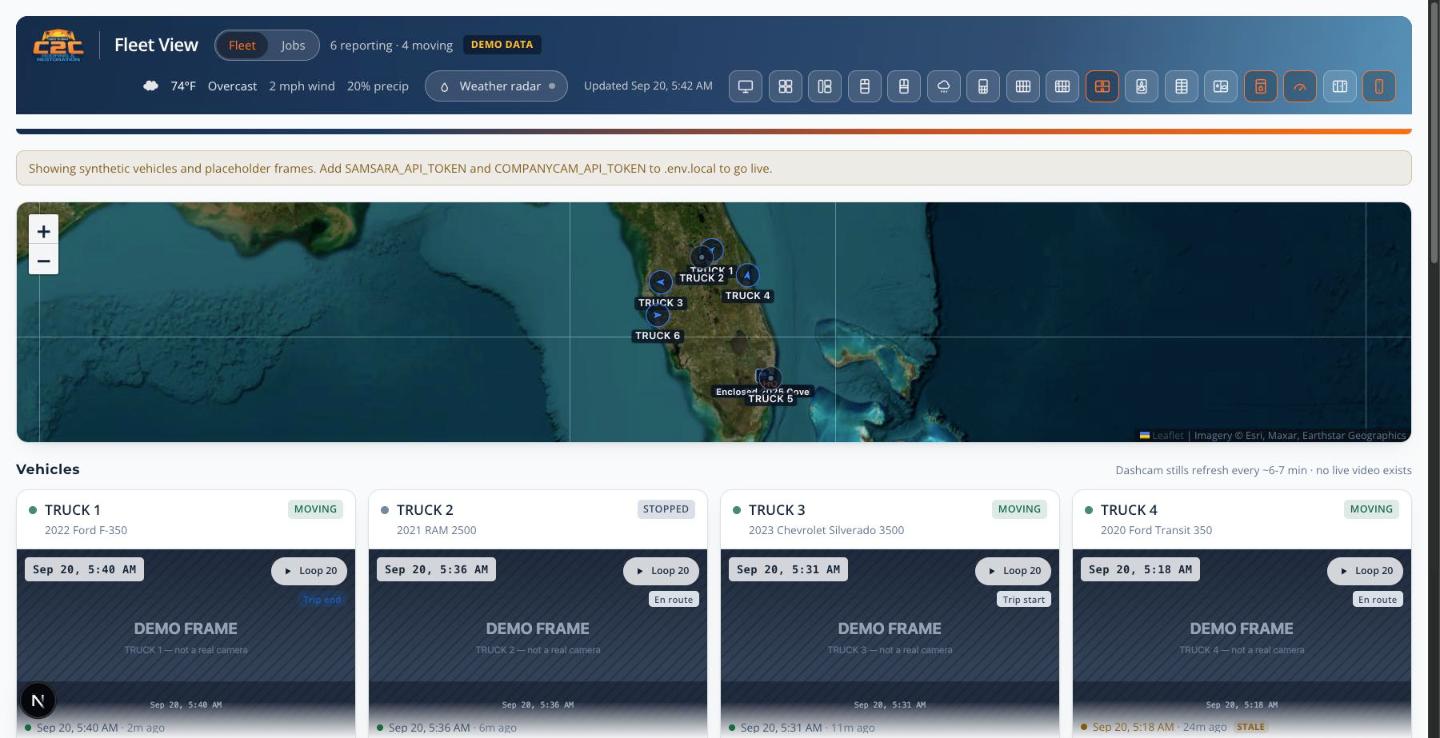
One live dashboard for a South Florida restoration company: the whole fleet on a map with weather radar, a card per vehicle showing its newest dashcam still and exactly where it is, and a strip of the newest field photos from the job sites.
Samsara, CompanyCam, weather
Vehicles, vehicle statistics and camera media from Samsara. Job photos and projects from CompanyCam. Open-Meteo and RainViewer for conditions and radar, both keyless.
Server-side proxy, no database
Every route proxies live vendor data on request. No cron, no archive, no heartbeat layer. Neither API token ever reaches the browser, and dashcam bytes are streamed rather than handing out vendor URLs.
Four wall displays
Built to be read across a room by people who are not looking for it. Allowlisted authentication. Every timestamp carries a date and a freshness verdict.
/api/fleet · /api/fleet/feed · /api/fleet/spans · /api/vitals · /api/vehicle/[id]/detail · /api/trailer/[id]/detail
/api/camera/[id] · /api/camera/[id]/loop · /api/jobs · /api/jobs/visits · /api/jobs/[id]/photos · /api/jobsites
/api/photos · /api/weather · /api/weather/regions · /api/health · /api/auth/send-code · /api/auth/send-link
Field notes on the Samsara API
Verified live against a real organization in August 2026, not read from documentation. These are the things that cost us time, and the reason a second integration goes in faster than the first.
-
The media endpoint returns the oldest frames, and ignores your limit
/cameras/mediareturns at most 100 rows per response, oldest first, and silently ignoreslimit. We tested at 200, 512 and 1000. All three returned exactly 100.Both halves matter together. Ask for seven vehicles across 24 hours and you get the oldest 100 frames of that window, then it stops. The newest frame, which is the entire point of the endpoint, sits on page two. This is the bug that put a three-day-old picture on the wall. Five of seven vehicles were affected, one of them driving at the time, while a 54-minute-old frame waited on page three.
The failure scales with how busy the fleet is. It is invisible on a quiet weekend and worst on the morning everyone is out working. Page with
after=<endCursor>;hasNextPageis honest.Shipped this bugVerified 2026-08-11 at limit 200, 512 and 1000 -
Rows nest one level deeper than you expect
Media rows arrive under
data.media, notdata[]and notmedia[]. Reading one level too shallow returns undefined, which looks exactly like this fleet has no cameras, with no error raised anywhere.VerifiedLive org, Aug 2026 -
vehicleIds is required, and the time range caps at one day
Omitting
vehicleIdsis a400, not an unfiltered query. Pass the roster explicitly. Windows wider than a single day also return400.VerifiedLive org, Aug 2026 -
Media URLs expire in exactly eight hours
They carry
X-Amz-Expires=28800. A URL placed in the DOM works all afternoon and breaks silently that night, which is the worst possible failure shape for a display nobody is watching. We proxy the bytes instead of handing out the URL.Measured28800 seconds, confirmed on response -
There is no live video. There are stills, every six to seven minutes
What comes back are stills with a
triggerReasonofperiodicStill,tripStartStill,tripEndStillorsafetyEvent. That cadence is the ceiling on freshness, not your poll rate. Polling harder does not make the picture newer, and promising an owner live video is a promise the platform cannot keep.A parked truck simply produces no new frame. That is normal and must be rendered as normal, not as an error.
VerifiedObserved cadence, live fleet -
Engine state, battery and RPM may be unlicensed, and fail silently
On a given organization these can return empty without raising an error. Audit the license matrix before promising a customer anything beyond GPS, because the demo will work on your org and quietly show nothing on theirs.
Promise riskOrg-dependent, check before scoping -
The adjacent systems have their own traps
CompanyCam sends
0,0for a photo with no GPS fix. That is null island, not the Gulf of Guinea, and on this fleet two of four uploaders send it on every photo because location is off on those handsets. That is half the photo volume. Guard for it anywhere coordinates become a place.Its
per_pagealso caps at 50 silently, and its photo CDN URLs are public, permanent and geotagged, so anything customer-facing needs them stripped first.VerifiedLive org, Aug 2026
The freshness doctrine
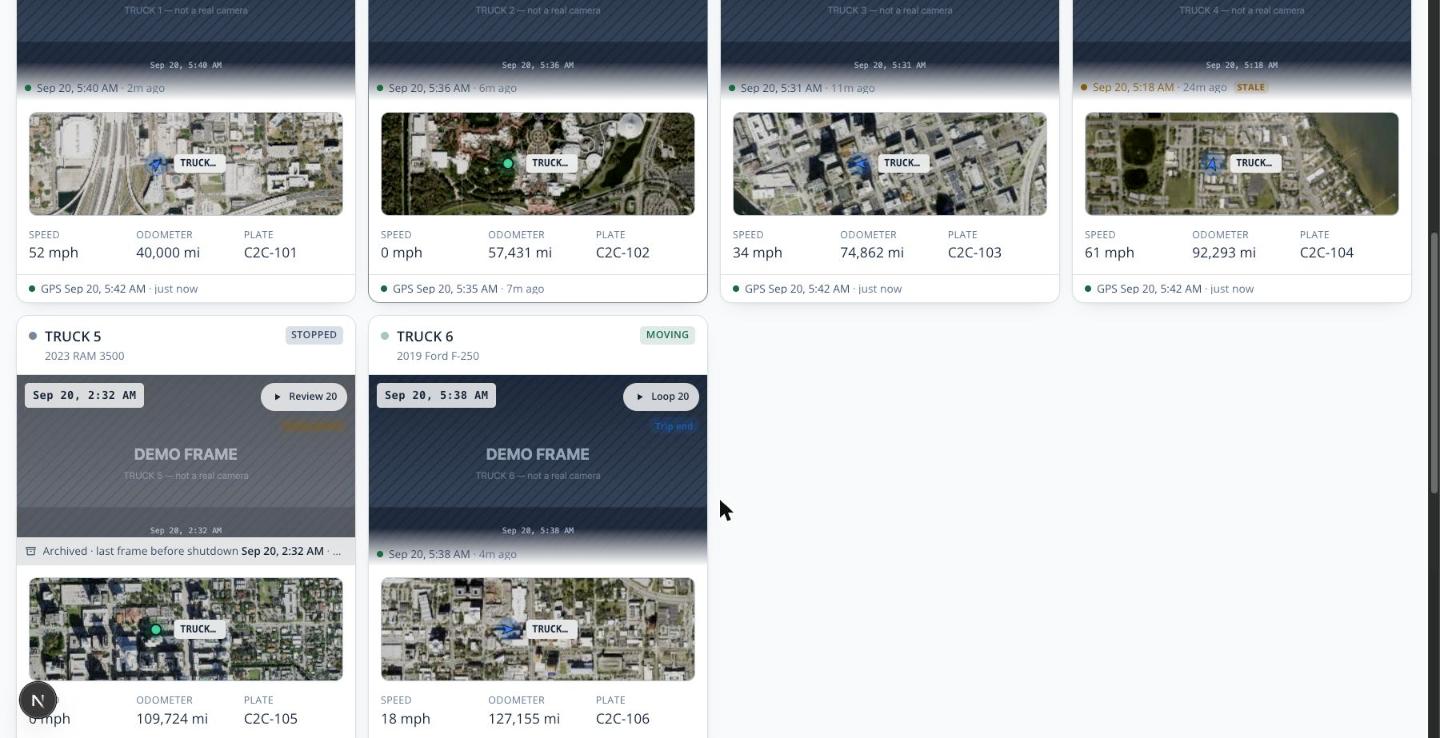
Four rules, written the day after the wall display lied. One module decides staleness, and every surface that renders a timestamp goes through the same badge.
- A newer frame always wins. Nothing older can silently outrank something fresher.
- Every timestamp renders with a date. A bare
5:01 PMis indistinguishable from the same minute three days ago. Cheapest guard here, and the one that would have caught the original bug on its own. - The staleness verdict is carried, never recomputed. A new surface that formats its own date walks around the first two rules.
- Past a hard age cap the image is not rendered at all. A blank panel saying no recent image is honest. A stale photograph of a place the truck is not is worse than showing nothing.
The doctrine, rendered
The rules above are not documentation. They are visible in the product on every card.
Why this matters to an owner
Nobody who runs trucks wants a dashboard. They want to stop calling people to find out where things are, and they want to trust what the screen says without walking outside to check.
That second part is the whole game. A fleet display that is wrong once is never trusted again, and the owner goes back to the phone. Which is why the unglamorous half of this page, the pagination order and the date on the timestamp, is the half that decides whether the system gets used at all.
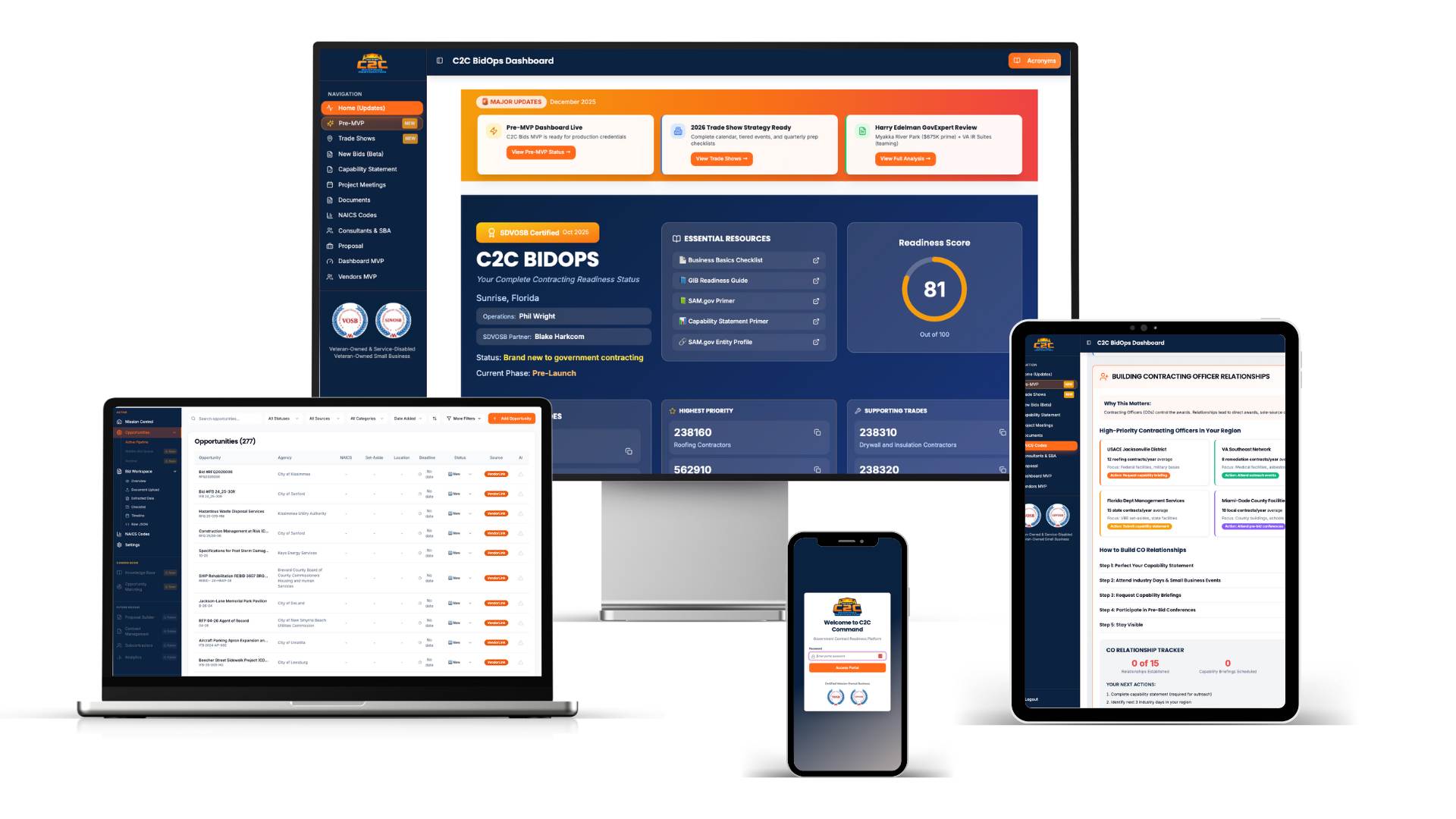
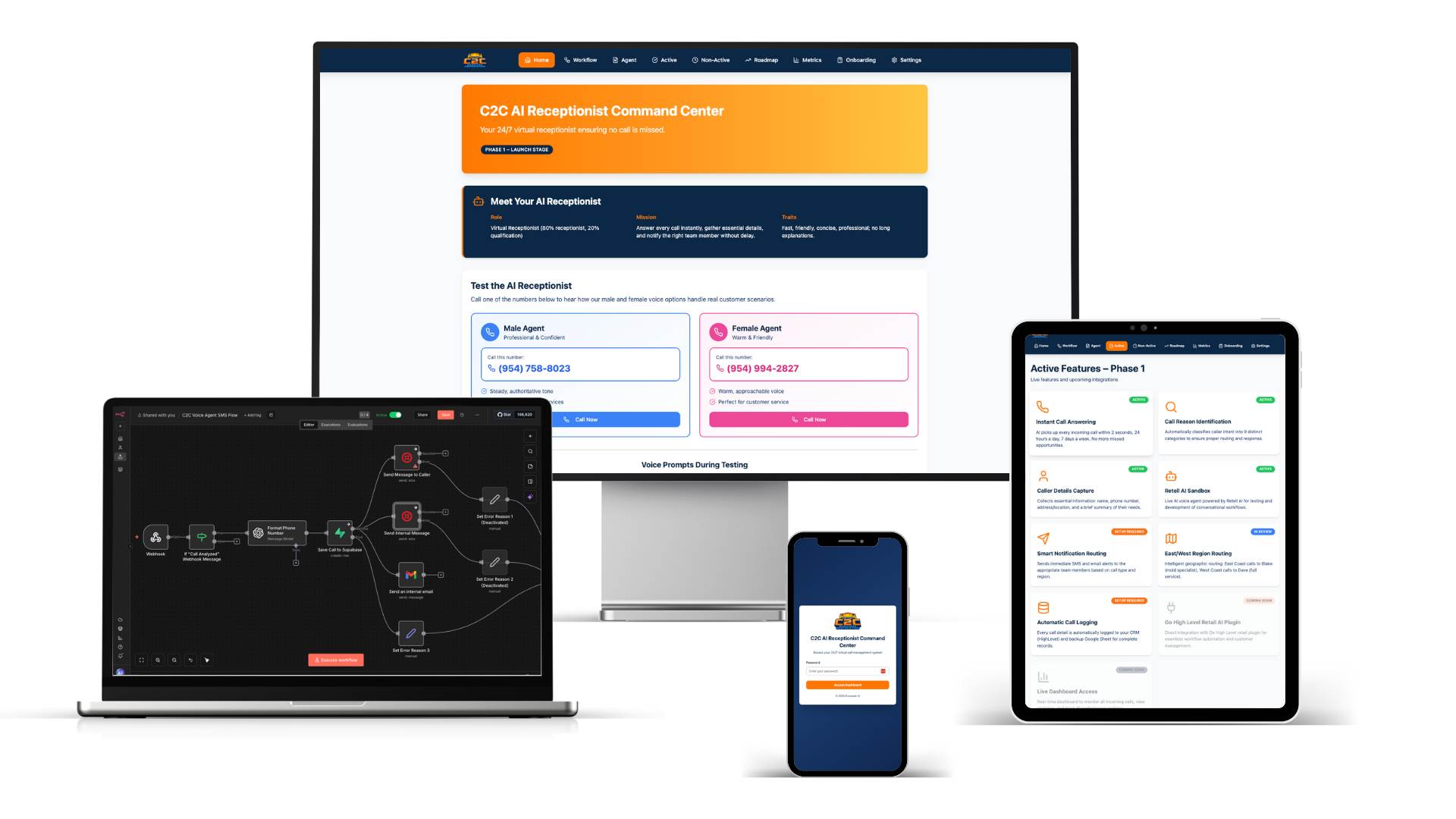
We build the rest of the operation around it too: CRM, field photography, voice intake, scheduling and federal bid pipelines. Telematics data is most valuable when it stops being a separate screen.
The rest of the operation
Telematics is most valuable when it stops being a separate screen. The same client runs these alongside the fleet wall.
EverPeak AI
We build and run the operational systems that roofing, restoration and logistics companies depend on, and we are a Samsara integrator in production today. Integration-first, no hardware resale.